
The Screen Time Problem in Schools—and a Movement-Based Solution
- Jun 2
- 4 min read
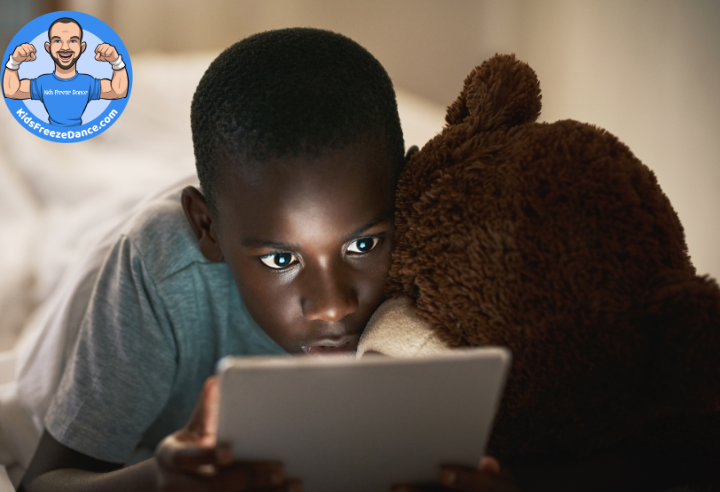
Screen time in education is under increasing scrutiny. Parents and teachers are asking a consistent question: how much screen use is too much, and what type of screen use actually supports learning?
The discussion is shifting. It is no longer only about limiting minutes. It is about understanding impact.
Not all screen time produces the same outcome. Passive screen use often leads to reduced attention and shallow engagement. In contrast, structured, active learning experiences can support focus, comprehension, and retention.
The core issue is not screens themselves. It is how children are engaged through them.
Kids Freeze Dance is built around this distinction. It replaces passive viewing with active participation. It combines purposeful movement with academic instruction so children are physically and mentally engaged while learning Math and Literacy concepts.
Quality Over Quantity
The screen time conversation is increasingly focused on quality rather than strict time limits. Children can spend similar amounts of time on screens, yet experience very different learning outcomes depending on what they are doing.
Much of children’s screen use today is passive. They watch, tap, or scroll without sustained cognitive effort. This type of engagement does not require deep thinking or active problem-solving. Over time, it can contribute to shorter attention spans, weaker retention of information, and lower engagement during instruction.
Learning research consistently shows that children learn more effectively when they are actively involved in the process. Passive intake does not build strong memory pathways. Active engagement does.
Movement changes how the brain processes information. It increases blood flow and oxygen to the brain and activates multiple regions at once. It supports attention, memory formation, and cognitive processing.
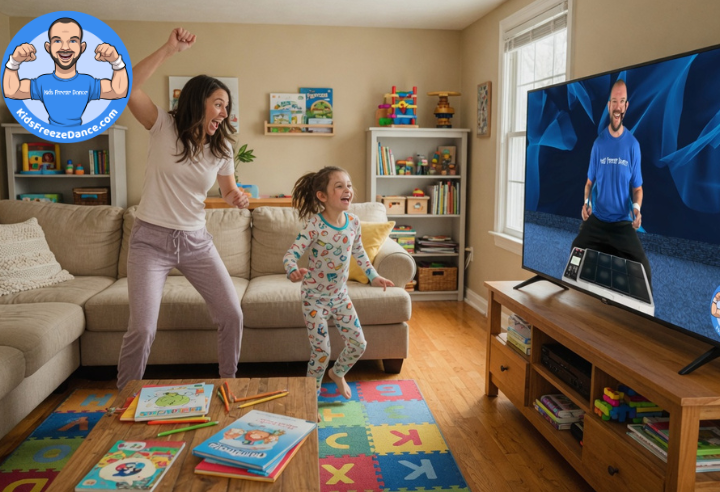
Kids Freeze Dance applies this principle directly. Instead of simply watching instructional content, children respond to it through movement and action. They are required to listen, think, and physically engage with the material.
This shifts screen time from passive consumption to active learning. As a result, children are more focused, more engaged, and more likely to retain what they are learning.
School Device Saturation
The use of digital devices in classrooms has increased significantly. Tablets and laptops are now common tools for daily instruction in many schools.
Alongside this increase, concerns have emerged from educators. Teachers frequently report challenges with attention, distraction, and reduced student interaction. In some districts, these concerns have led to restrictions or reevaluations of device-heavy instruction.
This reflects a growing need for balance in the classroom. While technology has value, it should not replace active, hands-on learning experiences.
Movement-based instruction provides that balance.
Kids Freeze Dance reduces reliance on passive device use by engaging students physically in the learning process. Instead of sitting and interacting only with a screen, students move, respond, and participate as part of the lesson.
This supports classroom priorities that many teachers are actively trying to strengthen: sustained attention, meaningful participation, and active engagement with academic content. It also creates a more dynamic learning environment without adding additional screen dependency.

Algorithmic Engagement
Many digital platforms designed for children are built to maximize attention. Features such as infinite scrolling, autoplay, and reward-based feedback loops are intentionally designed to keep users engaged for extended periods of time.
While effective for engagement, these systems often encourage passive consumption rather than active thinking. Over time, this can influence how children approach learning tasks. Some may struggle to sustain attention on activities that do not provide constant stimulation. Others may become more easily distracted or disengaged during structured instruction.
There are also broader concerns tied to well-being. Excessive exposure to highly stimulating digital environments can affect sleep, emotional regulation, and offline social interaction.
Children need learning experiences that restore balance. They need opportunities to focus, process information, and engage their bodies in meaningful ways without constant algorithmic stimulation.
Kids Freeze Dance offers a different approach. It removes passive scrolling and replaces it with structured participation. Children are not consuming content continuously. They are interacting with it in a focused and intentional way.
Each activity requires attention, response, and movement. This creates a cycle of engagement that supports focus and regulation rather than overstimulation. It also reinforces healthier learning patterns by encouraging single-task attention, active participation, and clear transitions between learning moments.
This is especially important for children who are already heavily exposed to algorithm-driven content outside of school. Kids Freeze Dance provides a structured alternative that prioritizes attention, movement, and learning over passive consumption.
Conclusion
Concerns about screen time in education often come down to three main issues.
First, passive screen use reduces the quality of learning by keeping children in an observational role rather than an active one. Kids Freeze Dance addresses this by turning instruction into movement-based participation that requires engagement and focus.
Second, increased device use in classrooms has created challenges with attention and interaction. Kids Freeze Dance offers a structured, movement-based alternative that supports learning without adding to screen dependency.
Third, algorithm-driven platforms often promote passive consumption patterns that can interfere with attention and regulation. Kids Freeze Dance avoids these patterns by replacing endless stimulation with purposeful, structured engagement.
The platform supports a wide range of movement-based learning styles, including Freeze Dance, Guided Movement, Dot Freeze Dance, Pool Noodles, Desk Drumming, Whack and Freeze, Paper Plate Skate, Duck and Punch, Cups, Chair Guided Movement, and Lava Balance.
Content is organized across seasonal and academic themes such as Fall, Halloween, Day of the Dead, Thanksgiving, Winter, Christmas, Valentine’s Day, St. Patrick’s Day, Easter, Spring, Earth Day, Cinco de Mayo, Birthday, and everyday classroom topics.
An intuitive search and filtering system allows teachers and parents to quickly locate videos by grade, subject, skill, or theme. Favorites can be saved for future use.
With more than 5,000 videos and new content added weekly, Kids Freeze Dance provides a growing library of structured movement-based learning resources. The platform is also free of ads, allowing children to remain focused on learning without distraction.
To begin using Kids Freeze Dance, start a free trial at https://www.kidsfreezedance.com.



Comments